
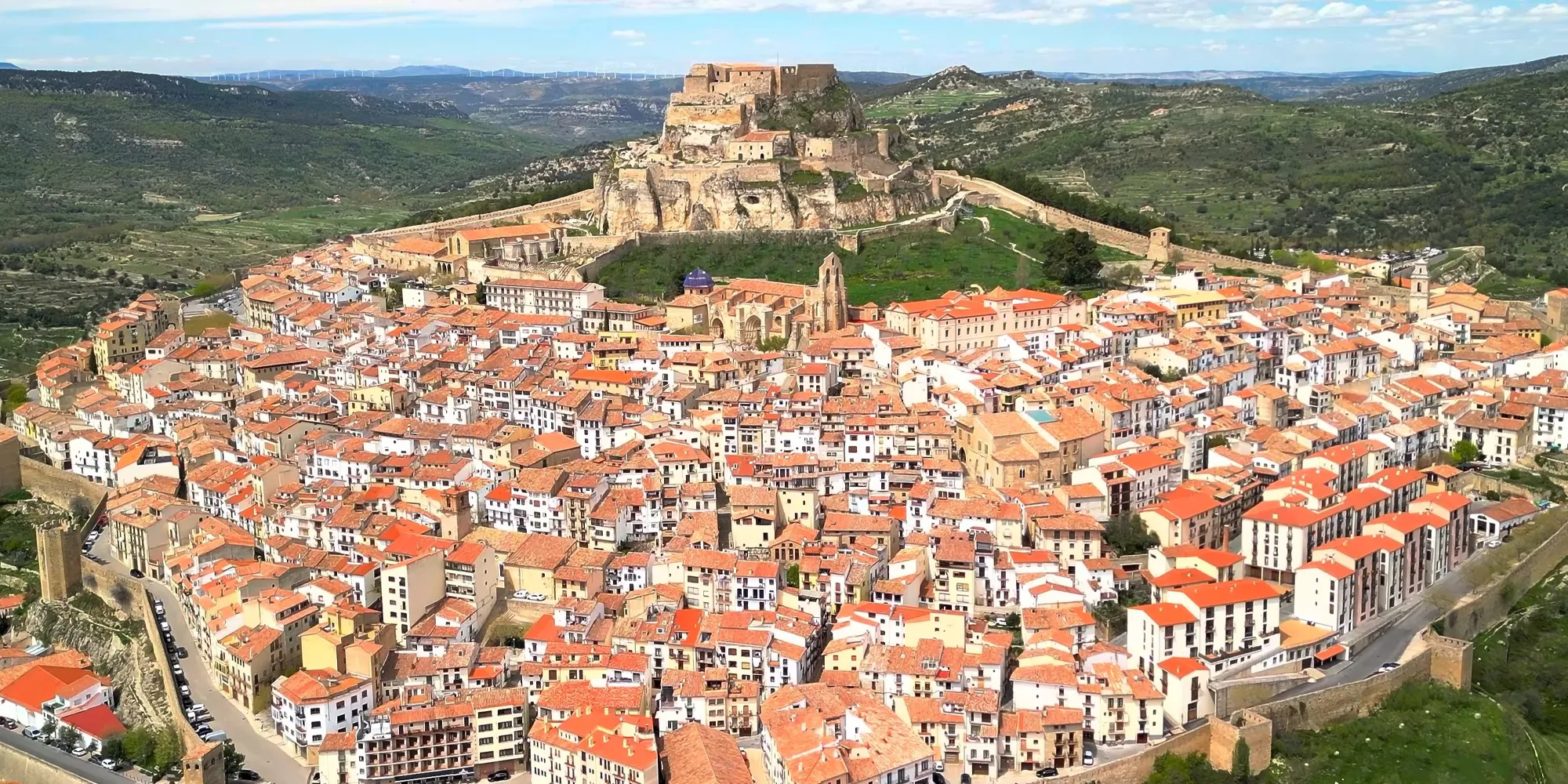
Kotor, Montenegro Travel Guide: Old Town, Fortress & Practical Tips
Kotor is one of the places we would put near the top of a first Montenegro itinerary.
Its compact walled Old Town sits between the Bay of Kotor and steep limestone mountains, with fortifications climbing high above the terracotta rooftops. Historic churches, small squares and former palaces fill the streets below, while boat trips, Perast and the mountains around Lovćen make Kotor an excellent base for exploring more of western Montenegro.
Kotor is particularly well suited to travellers interested in history, scenery, walking and sightseeing. It is less suited to anyone looking primarily for a conventional sandy-beach resort — for that, Budva, Bečići or Ulcinj are stronger choices.
For most first-time visitors, we would recommend two to four nights in Kotor or nearby Dobrota rather than treating the town solely as a quick day trip.
Kotor at a Glance
| Best for | First visits, history, scenery, boat trips |
| Recommended stay | 2–4 nights |
| Nearest airport | Tivat Airport |
| Distance from Tivat Airport | About 8 km |
| Car needed? | No for Kotor itself |
| Best alternative base | Dobrota |
| Beach holiday? | Not Kotor’s strongest point |
| Currency | Euro (€) |
| Main attraction | Old Town and St John Fortress |
| Good day trips | Perast, Bay of Kotor, Lovćen, Budva |
| Main drawback | Cruise crowds and summer traffic |
Is Kotor Worth Visiting?
Yes — particularly on a first visit to Montenegro.
Kotor combines three things unusually well: a substantial historic town, dramatic scenery and access to the wider Bay of Kotor.
It is also compact enough that you do not need a car simply to enjoy the town. Restaurants, churches, museums, the fortress route and the waterfront are all accessible on foot from the historic centre.
However, Kotor has become extremely popular, and that popularity is its principal weakness. Cruise ships can add thousands of visitors to a very small Old Town during the middle of the day.
That does not mean avoiding Kotor. It means timing your visit intelligently.
If you stay overnight, early mornings and evenings can give you a markedly different experience from arriving with everybody else during the busiest part of the day.
Kotor Old Town and its UNESCO Heritage
Kotor’s walled historic centre forms part of the Natural and Culturo-Historical Region of Kotor, inscribed on UNESCO’s World Heritage List in 1979.
The protected region is considerably larger than the streets inside the walls. UNESCO’s property covers the best-preserved south-eastern part of the Bay of Kotor and recognises the relationship between its historic settlements, architecture and dramatic mountain landscape.
Kotor developed over many centuries as an important maritime, commercial and artistic centre. Romanesque churches sit alongside Gothic, Renaissance and Baroque buildings, while centuries of Venetian influence are particularly visible in the fortifications, palaces and townscape.
A major earthquake in 1979 badly damaged many monuments, including churches and sections of the town walls. Subsequent restoration was carried out with substantial international and UNESCO support.
How Long Should You Spend in Kotor?
You can see the principal Old Town sights in a day, but we think this undersells Kotor.
One day
Enough for the Old Town, cathedral, several churches and perhaps the fortress climb.
Two nights
A much better first visit. You can see Kotor when the streets are quieter and add either Perast or a boat trip.
Three or four nights
Our preferred length for someone using Kotor as their principal Montenegro base. It allows time for the Old Town, Bay of Kotor, Perast, a boat trip and perhaps the cable car or Lovćen.
Five nights or longer
Still perfectly viable, particularly if staying in quieter Dobrota rather than directly inside the Old Town.
For a holiday of a week or more, however, we would normally consider combining Kotor with somewhere that offers a distinctly different experience — perhaps Budva for beaches or Žabljak for the mountains.
What to See in Kotor
Our separate Things to Do in Montenegro guide covers the wider country, and we will eventually have a dedicated Things to Do in Kotor guide.
For now, these are the sights we would prioritise.
1. Wander Through Kotor Old Town
Don’t try to navigate Kotor exclusively by following a rigid route.
The historic centre is small enough to wander through comfortably, with narrow lanes repeatedly opening into little squares.
The principal entrance is the Sea Gate, constructed during the Venetian period in the 16th century. From here you emerge onto the Square of Arms with its Clock Tower before disappearing into the smaller streets behind.
Other entrances include the North or River Gate and the South or Gurdić Gate.
Look beyond the obvious main streets. Much of Kotor’s appeal comes from smaller courtyards, stone staircases, church fronts and glimpses between buildings rather than one single monument.
2. Visit St Tryphon’s Cathedral
The Cathedral of St Tryphon is Kotor’s most important church and one of its principal historic monuments.
The Romanesque cathedral was consecrated in 1166, although earthquakes and subsequent reconstruction have altered parts of the building considerably over the centuries.
Inside are religious artworks, a treasury and relics associated with St Tryphon, Kotor’s patron saint.
The cathedral is still an active religious building, so opening arrangements for visitors can occasionally be affected by services and ceremonies.
3. Climb to St John Fortress
For the classic view over Kotor and the bay, climb the fortified route above the Old Town towards the Fortress of St John, also known as San Giovanni or Sveti Ivan.
The climb involves roughly 1,350 uneven steps and rises about 260 metres above Kotor. On the way you pass the small Church of Our Lady of Remedy before continuing towards the fortress.
This is not a casual summer stroll. The route is steep, exposed and uneven.
In hot weather, go early, carry plenty of water and wear footwear with proper grip. Avoid attempting it in the strongest midday heat.
Kotor Fortress entrance fee
The individual admission charge is currently €15 per person during the paid season, last checked August 2026. Opening arrangements and charging periods can change, so check Kotor Municipality’s current information shortly before visiting.
Accessibility: The fortress climb is unsuitable for wheelchairs and will be difficult for anyone with significant mobility problems or knee difficulties.
4. See St Luke’s and St Nicholas’ Churches
The small Church of St Luke dates from the 12th century and is one of Kotor’s most interesting religious buildings.
For a period of its history the church accommodated both Catholic and Orthodox worship, with separate altars.
Nearby St Nicholas’ Church, considerably newer, is one of the most prominent Serbian Orthodox buildings within the Old Town.
Together with St Tryphon’s Cathedral, these churches illustrate some of the different religious traditions represented within historic Kotor.
5. Visit the Maritime Museum
Kotor’s history is inseparable from the sea.
The Maritime Museum of Montenegro occupies the former Grgurina Palace and covers the maritime history of Kotor and the wider Bay of Kotor.
It is worth visiting if you want to understand why such a relatively small town contains so many impressive churches and palaces: generations of merchants, captains and shipowners connected Kotor with the wider Mediterranean.
If your time in Kotor is very limited, we would prioritise wandering the Old Town and fortress first. With two or more days, the museum deserves adding.
6. Walk Towards Dobrota
You don’t have to stay inside Kotor’s walls.
Immediately north of the Old Town, Dobrota stretches for several kilometres along the waterfront.
Walking at least part of the shoreline gives you a different perspective over the bay and provides cafés, restaurants and places where people swim during warmer weather.
Dobrota is also one of the places we particularly recommend considering for accommodation if you want easy access to Kotor without necessarily sleeping in the busiest streets.
7. Take the Kotor–Lovćen Cable Car
The Kotor–Lovćen Cable Car provides a much easier route to high-level views than climbing Kotor’s fortress walls.
The gondola takes around 11 minutes between the lower station at Dub and Kuk on Lovćen, with views across the Bay of Kotor during the ascent.
As of August 2026, the standard adult return fare is €25, but prices, operating days and hours can change and the cable car is weather-dependent. Check the operator’s website before setting out.
The upper complex now includes additional attractions as well as restaurants and viewpoints.
How to Avoid the Worst Cruise Crowds
This is one of the most useful things to understand about Kotor before arriving.
The Port of Kotor sits immediately outside the Old Town walls and is a major Mediterranean cruise destination. The port says it receives approximately 500 cruise ships and around half a million cruise passengers each year. Because Kotor Old Town is compact, several large ships arriving together can make a substantial difference to how busy it feels.
Our advice
If you are staying in Kotor:
- explore the Old Town early in the morning;
- use the middle of a very busy cruise day for a boat trip, swimming or another excursion;
- return to the Old Town later in the afternoon or evening.
If visiting for the day, check the Port of Kotor cruise arrivals before deciding when to arrive.
This is one instance where a little advance planning can make a significant difference.
Where to Stay in Kotor
The best place depends on whether you prioritise atmosphere, tranquillity or easy parking.
Inside Kotor Old Town
Best for: atmosphere and first-time visitors.
Staying behind the walls puts restaurants and sights immediately outside your accommodation.
The compromises are noise, steps, cobbled streets and the fact that vehicles cannot reach accommodation inside the pedestrian historic centre.
If travelling with a lot of luggage, find out exactly where you will need to carry it from.
Dobrota
Best for: waterfront views and longer stays.
Dobrota is our strongest alternative to the Old Town. It can be quieter, provides more waterfront accommodation and still allows access to central Kotor.
Be careful with distances, however. Dobrota extends for several kilometres, so some accommodation marketed as “Kotor” is much further from the Old Town than others.
Elsewhere around the Bay
Places such as Muo, Prčanj and Perast can provide beautiful settings, but they function differently from staying in central Kotor.
They make more sense if tranquillity and bay views matter more than walking into the Old Town whenever you please.
Our forthcoming Where to Stay in Kotor guide will compare these areas in much more detail.
Does Kotor Have Beaches?
Kotor is beside the sea, but it is not a conventional beach resort.
Around Kotor and Dobrota you will find small pebble areas, bathing platforms and places where locals and visitors swim in the bay.
These are pleasant for a dip, but anyone imagining broad sandy beaches immediately outside the Old Town may be disappointed.
If beach days are an important part of the holiday, look towards Budva, Bečići and the wider Budva Riviera, or further south towards Ulcinj.
Best Time to Visit Kotor
Montenegro’s main visitor season runs broadly from late spring into autumn, with the national tourism organisation identifying May to October as the country’s principal favourable period.
For Kotor specifically, we particularly like the idea of May, June, September and early October for sightseeing.
July and August provide reliably summery conditions but are also hotter and busier, with substantial cruise and road traffic.
Spring and autumn are particularly attractive if walking the fortress or exploring on foot matters more to you than spending every day swimming.
Winter is much quieter but has fewer seasonal tourism services and less predictable weather.
Getting to Kotor from the UK
Tivat Airport
Tivat Airport (TIV) is by far the closest airport to Kotor.
Montenegro Airports puts the road distance at approximately 8 km, with an uncongested driving time of around 12 minutes. In summer traffic, allow considerably more time.
For summer 2026, direct services to Tivat are operating from several UK airports including Birmingham, Bristol, London Gatwick, London Heathrow, London Luton, London Stansted and Manchester.
Flight routes are highly seasonal, so always check the airline or airport schedule for your actual dates.
A particularly useful development for Yorkshire travellers is that Jet2 has announced direct Leeds Bradford–Tivat flights from May to September 2027.
Podgorica Airport
Podgorica Airport (TGD) is much further from Kotor but can be useful if flight schedules or fares are better for your dates.
The journey is approximately 85–90 km by road.
Dubrovnik Airport
Flying to Dubrovnik in Croatia is another possibility, especially where UK flight availability is significantly better.
Dubrovnik Airport is approximately 70 km from Kotor, but the journey crosses an international border. Border queues can therefore make travel times much less predictable, particularly during busy periods.
Do You Need a Car in Kotor?
No — not if Kotor and organised excursions form the centre of your holiday.
The Old Town itself is pedestrianised, and Kotor is one of Montenegro’s better bases for boat excursions, organised day trips and taxis.
A car becomes much more useful if you want to explore:
- Durmitor and northern Montenegro;
- Lake Skadar independently;
- quiet beaches and villages;
- scenic mountain roads;
- multiple bases around the country.
If you do hire a car, Kotor itself is one place where the vehicle may spend a fair amount of time parked.
Parking in Kotor
You cannot drive into Kotor Old Town, so all visitor parking is outside the walls.
There are several paid car parks around the centre. Prices vary considerably according to location.
As of July 2026, information provided by Kotor Municipality listed Autoboka at €0.90 per commenced hour, while the prime Gradska Riva waterfront parking was considerably more expensive at €4.80 per commenced hour for foreign visitors. Other municipal parking options sit between those prices.
Rates can change, so use the displayed tariff when you arrive rather than relying on an old online price.
Parking demand increases sharply during summer and on busy cruise days. If your accommodation offers private parking, treat that as a meaningful advantage.
For a future dedicated Parking in Kotor guide we can map the principal car parks, current tariffs and walking times to the Sea Gate.
Best Day Trips from Kotor
Kotor is one of Montenegro’s strongest bases for excursions.
Perast and Our Lady of the Rocks
The obvious first trip.
Historic Perast lies further around the Bay of Kotor, with boats travelling to the artificial island of Our Lady of the Rocks just offshore.
Bay of Kotor Boat Trip
A boat trip provides an entirely different view of the bay.
Longer excursions may include Perast, Our Lady of the Rocks, the Blue Cave, submarine tunnels and parts of the Luštica Peninsula.
Lovćen National Park
Head into the mountains behind Kotor for panoramic views and the Njegoš Mausoleum.
The cable car now provides another way to combine Kotor with the Lovćen landscape.
Budva
Budva is useful precisely because it contrasts with Kotor.
Its beaches, larger resort infrastructure and nightlife make it worth seeing even if you ultimately prefer Kotor.
Herceg Novi
At the western entrance to the bay, Herceg Novi has fortifications, a historic centre and a long waterfront promenade.
Eating and Drinking in Kotor
Kotor has a substantial concentration of restaurants within and immediately around the Old Town.
Seafood naturally features strongly, alongside Montenegrin dishes and food from the wider Adriatic region.
Look out for Njeguški pršut, local cheeses and Montenegro’s best-known native grape varieties, including Vranac for red wine and Krstač for white.
Restaurants directly on the most obvious Old Town squares are convenient, but don’t assume the busiest location automatically means the best meal.
Accessibility in Kotor
The central Old Town is compact and largely pedestrian, but that does not mean it is fully accessible.
Expect:
- uneven stone and cobbled surfaces;
- occasional steps and thresholds;
- historic buildings without lifts;
- significant steps in some accommodation;
- a completely unsuitable fortress route for wheelchair users.
The flatter central squares and waterfront are much easier than the fortress and upper routes.
Anyone with reduced mobility should investigate the exact position and internal access arrangements of accommodation before booking rather than relying simply on a ‘Kotor Old Town’ address.
Kotor or Budva?
If you are choosing between Montenegro’s two most obvious coastal bases:
Choose Kotor for:
- history;
- scenery;
- boat trips;
- atmospheric streets;
- sightseeing.
Choose Budva for:
- beaches;
- nightlife;
- resort facilities;
- a more conventional seaside holiday.
For seven nights or more, staying in both can work well because they provide different experiences.
Our Verdict on Kotor
Kotor deserves its reputation, but how you experience it matters.
Arrive only during the busiest hours of a major cruise day and you may wonder why everybody praises it so highly.
Stay for a couple of nights, walk through the streets early in the morning, see the Old Town after sunset, climb above the walls and spend time out on the bay, and Kotor becomes a much more compelling destination.
For a first Montenegro holiday centred on history, scenery and sightseeing, Kotor or neighbouring Dobrota would be our first place to investigate as a base.
If beaches and nightlife are more important, start instead with Budva and the Budva Riviera.
Continue Planning
- Where to Stay in Montenegro
- Things to Do in Montenegro
- Destinations in Montenegro
- Bay of Kotor
- Perast & Our Lady of the Rocks
- Herceg Novi
- Montenegrin Food
Last checked: August 2026.