
Montenegro may be a small country, but choosing where to go can completely change the character of your holiday.
Along the Adriatic coast and the Bay of Kotor you will find historic walled towns, waterfront villages and places to swim, sail and take boat trips. Travel inland and north and the scenery changes dramatically to forests, glacial lakes, deep river canyons and some of the highest mountains in the country.
For many first-time visitors, Kotor and the Bay of Kotor are the natural starting point, but they show only one side of Montenegro. If you have a week or more, combining the coast with one of the country’s mountain areas can make for a much more varied trip.
Our destination guides are being researched and expanded gradually. The places below already have detailed guides available, with more destinations being added as we complete them.
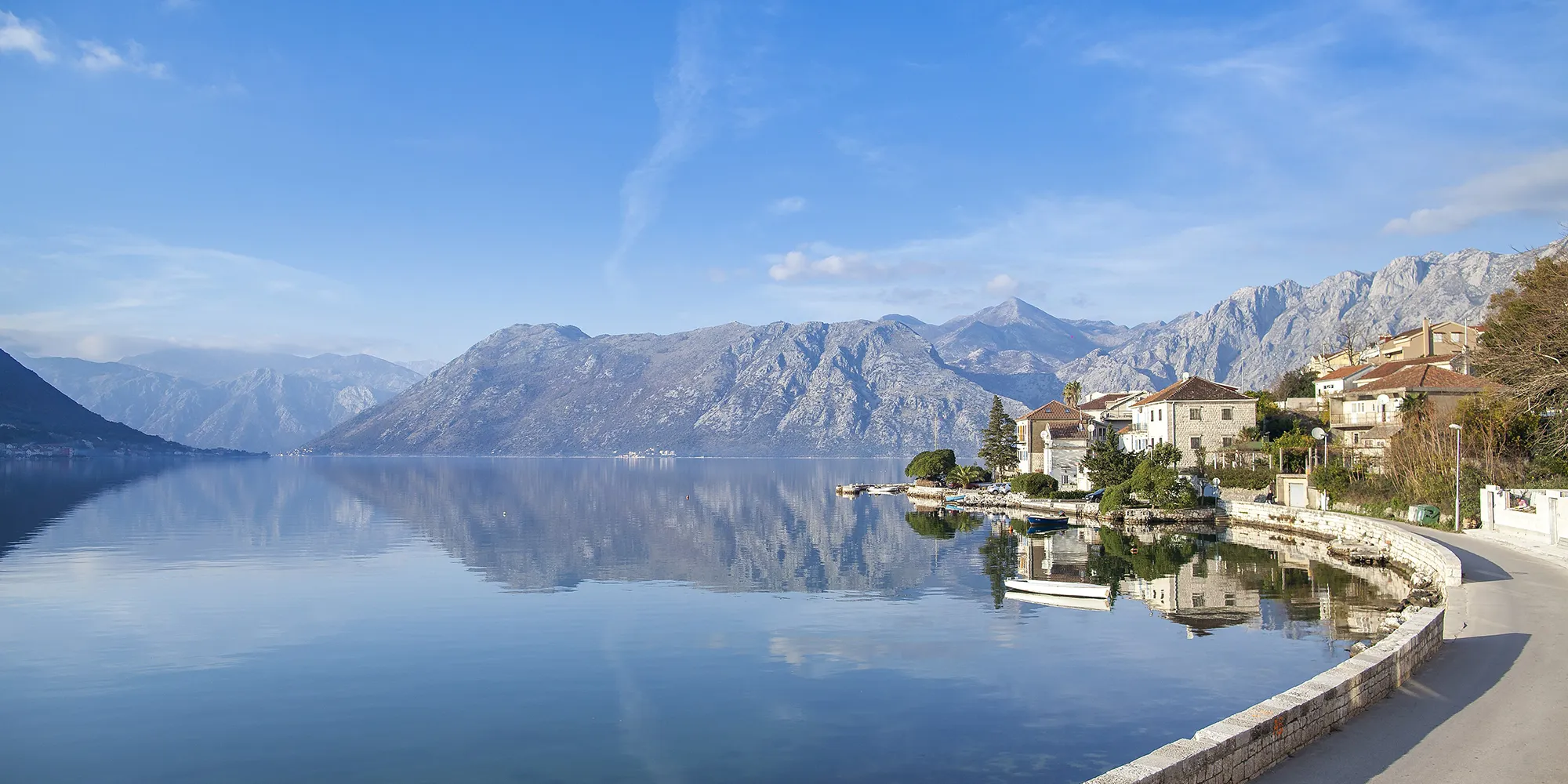
Bay of Kotor
The Bay of Kotor, or Boka Kotorska, is one of Montenegro’s most recognisable landscapes: a deeply indented Adriatic bay surrounded by steep limestone mountains and historic settlements.
The south-eastern part of the bay, including Kotor and its surrounding settlements, forms the UNESCO-listed Natural and Culturo-Historical Region of Kotor.
For a first visit to Montenegro, this is one of the easiest areas in which to combine history, scenery, restaurants, boat trips and sightseeing without necessarily hiring a car.
Best for: first-time visitors, scenery, history, couples, boat trips and multi-centre holidays.
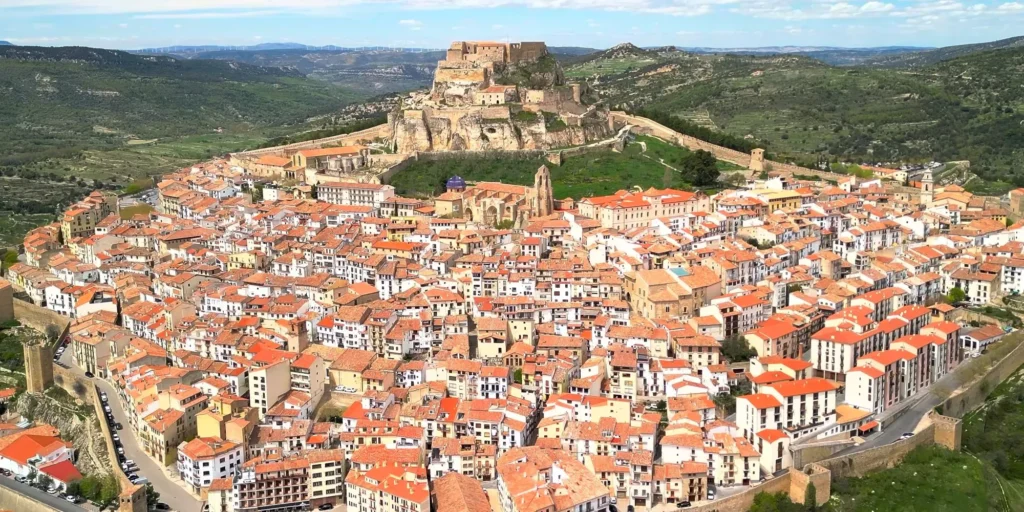
Kotor
If you have seen photographs of Montenegro before, there is a good chance that Kotor was in them.
Its compact medieval Old Town sits beneath enormous fortifications that climb the mountainside above the Bay of Kotor. Inside the walls are narrow streets, squares, churches, cafés and historic buildings, while boat excursions and day trips make Kotor a useful base for exploring much of the surrounding region.
Kotor is particularly strong for travellers who value history and sightseeing over a conventional beach-resort holiday.
One drawback is its popularity. The Old Town can become considerably busier when cruise ships are visiting, so staying overnight allows you to experience Kotor at quieter times of day.
Best for: first visits, history, sightseeing, boat trips and holidays without a car.
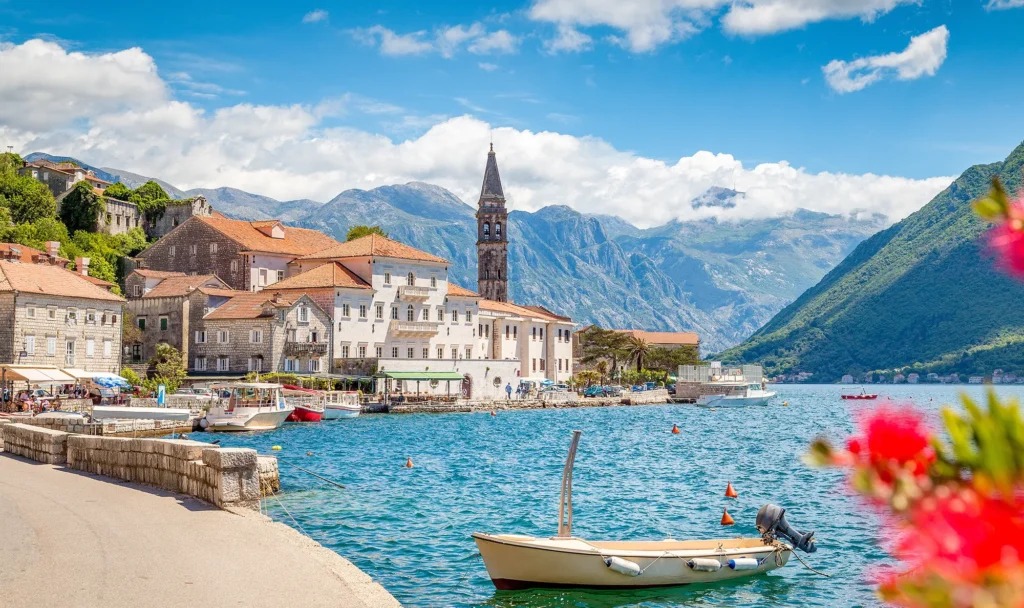
Perast and Our Lady of the Rocks
A short distance around the bay from Kotor, Perast offers a very different experience.
This small historic waterfront town is lined with stone houses, churches and former palaces, with mountains rising behind the bay. Immediately offshore are the islands of St George and Our Lady of the Rocks, the latter reached by short boat trips from Perast.
Many people visit for only a few hours, but staying overnight gives Perast a different character once much of the daytime traffic has gone.
It is not a large resort and has fewer facilities than Kotor, but that is part of its appeal.
Best for: couples, photography, short stays, historic atmosphere and boat trips.
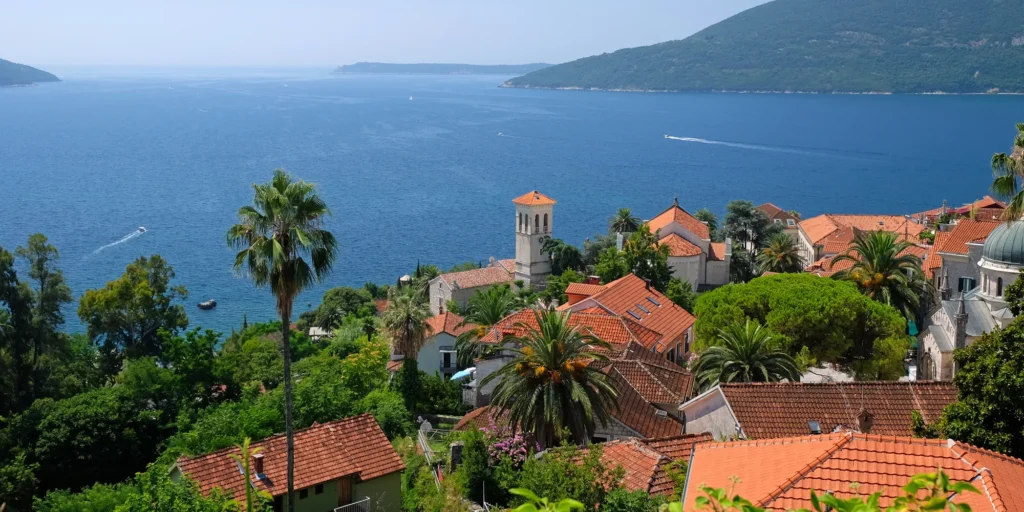
Herceg Novi
At the western entrance to the Bay of Kotor, Herceg Novi combines an historic centre, fortresses, waterfront areas and a long promenade stretching towards neighbouring Igalo.
It is a larger and more lived-in destination than Perast and can work particularly well for visitors looking for a longer coastal stay.
There is, however, one practical characteristic worth knowing before booking accommodation: Herceg Novi is very hilly. Its numerous stone stairways are such a distinctive part of the town that it is often known as the “city of stairs”.
For anyone with reduced mobility, or simply anyone who dislikes climbing, the exact position of accommodation is particularly important.
Best for: longer coastal stays, waterfront walks, history and exploring the western Bay of Kotor.
Montenegro’s Mountains and National Parks
The Adriatic coast receives much of the attention, but Montenegro’s inland landscapes are one of the best reasons to explore beyond the seaside resorts.
The country has five national parks, ranging from the mountains and glacial lakes of Durmitor and Biogradska Gora to Lake Skadar and the rugged landscapes of Prokletije.
Our national park section is still being expanded, but two areas already have detailed guides.
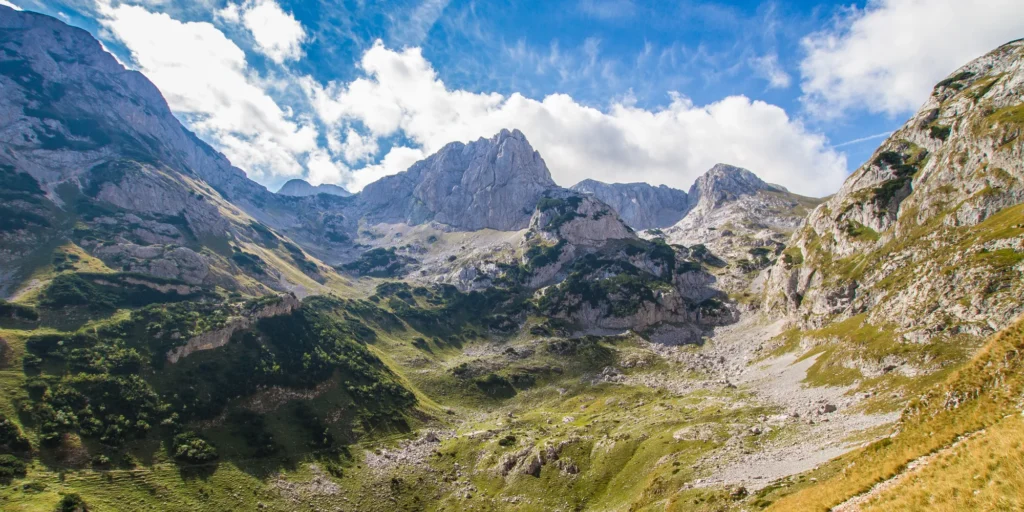
Durmitor National Park
For mountains and outdoor activities, Durmitor National Park is one of Montenegro’s outstanding destinations.
Located in the north of the country around the mountain town of Žabljak, Durmitor contains limestone peaks, glacial lakes, forests and the spectacular Tara River Canyon.
Durmitor was inscribed on UNESCO’s World Heritage List in 1980 and is particularly associated with hiking, climbing, rafting, mountain scenery and outdoor holidays.
Black Lake, close to Žabljak, is one of the park’s most accessible and popular places to visit, while the wider region rewards travellers who have enough time to explore by car.
Combining several nights around Kotor or the coast with two or three nights near Žabljak can create a dramatically more varied Montenegro holiday.
Best for: hiking, road trips, rafting, mountains, nature and active holidays.
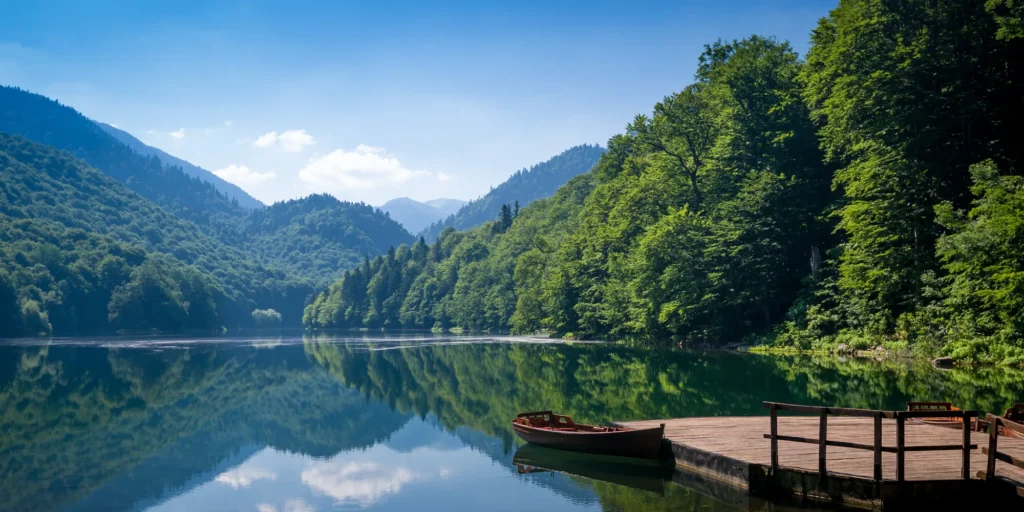
Biogradska Gora National Park
Biogradska Gora provides a different mountain landscape.
Situated in the Bjelasica mountains of northern Montenegro, the national park protects forests, mountain slopes, meadows, streams and six glacial lakes.
Its best-known feature is the old-growth forest surrounding Biogradsko Lake, where walking paths provide one of the easiest ways to experience this part of the park.
Biogradska Gora works particularly well for travellers touring northern Montenegro or combining mountain scenery with the nearby Kolašin area.
Best for: forests, walking, nature, photography and Montenegro road trips.
Which Part of Montenegro Should You Visit?
For a first trip of three or four nights, we would normally start with Kotor and the Bay of Kotor.
With around a week, you have enough time to begin combining contrasting areas. Kotor and the Bay can be paired with another coastal destination as our guides expand, or with Durmitor if you would prefer mountains and outdoor activities.
With ten days or longer, Montenegro becomes particularly well suited to a multi-centre trip. The distances may look short on a map, but mountain roads, summer traffic and frequent stops for scenery mean it is better not to rush.
If choosing a base rather than simply deciding what to visit, see our Where to Stay in Montenegro guide, which compares Kotor, Dobrota, Perast, Tivat, Budva, Herceg Novi, Ulcinj, Lake Skadar and Žabljak according to the type of holiday you are planning.
More Montenegro Destinations Coming Soon
We are gradually expanding VisitMontenegro.uk with researched guides to more of the country’s most useful destinations.
Future guides will include places such as Budva and the Budva Riviera, Tivat, Dobrota, Ulcinj, Lake Skadar, Žabljak, Kolašin, Cetinje and Montenegro’s remaining national parks.
Rather than publish short placeholder pages, we add destinations to this guide once we have enough practical information to make the individual page genuinely useful.
Last checked: August 2026.