
Area:
5,650 ha
Status:
National Park since 1952
Lakes:
6 glacial lakes
Elevation:
832 m above sea level to 2139 m above sea level
Primeval Forest Reserve:
1,600 ha
Plant species:
Over 2000
Coordinates:
42°53′53″N 19°36′07″E
Biogradska Gora National Park
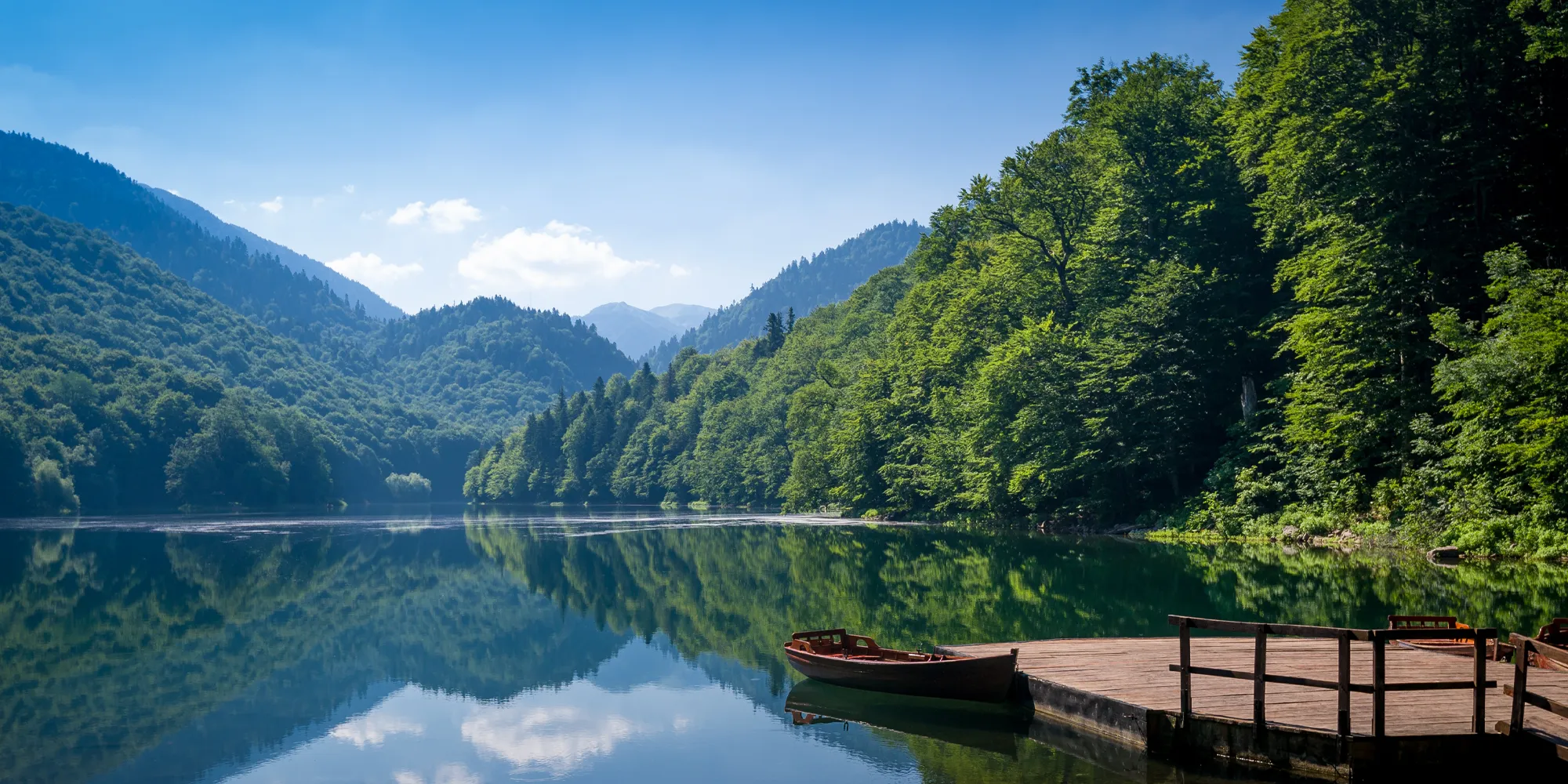
Across its 54 square kilometres, Biogradska Gora National Park showcases breathtaking natural scenery, including six pristine glacial lakes, majestic mountain peaks and slopes, old forests, lush meadows, and swift, clear streams.
It lies between the Lim and Tara rivers, in the Kolašin municipality of central Montenegro, in the Bjelasica mountain range, surrounded by the towns of Mjokovac and Berane.
The Park contains one of the few large virgin forests in Europe (an area of woodland that has remained undisturbed by human activity, allowing nature to evolve in its own rhythm). This ancient woodland has trees that are at least 40 meters tall and up to 500 years old. Biogradska Gora is one of Montenegro’s national parks and is included in UNESCO-related tentative/proposed heritage work, but it is not itself currently a UNESCO World Heritage Site.
King Nikola of Montenegro named the Biogradska Gora forest a protected area in 1878, and it has been preserved ever since. This was one of the first steps taken to safeguard the ecology in the Balkans.
It lies around 1,000 meters above sea level and close to Biogradsko Lake, which is the park’s primary glacial lake. There are a lot of both broadleaf and coniferous trees in this hilly to mountainous area.
These trees have a thick canopy that blocks off a lot of sunlight, which creates a rich undergrowth of mosses, lichens and ferns. Because they are part of an ancient, well-balanced ecosystem, dead trees are left where they fall, providing important homes for small mammals, fungi, and insects.